
If your cupboard smells musty, the smell isn’t coming from your clothes. It’s coming from mould and mildew growing on them — and the reason they’re growing is moisture in the air inside that cupboard.
That smell has a name. It’s made up of microbial volatile organic compounds: the gases mould gives off while it feeds. By the time you can smell it, it’s already established.
Here’s what causes it, what gets rid of it, and how to tell when it’s something more serious than a damp cupboard.
Why cupboards specifically
A cupboard is the worst room in your house, in miniature. No ventilation, no light, packed full of natural fibres that hold water, and very often built against an outside wall.
That last one matters more than people realise. An external wall is colder than the room. Warm, moist air meets it, cools, and the moisture condenses — inside your cupboard, behind your clothes, where you never see it.
Add the usual suspects:
- Clothes put away not quite dry. Still slightly damp from the line on a humid day, or folded warm out of the tumble dryer.
- Shoes. Leather holds moisture and feeds mould better than almost anything else in there.
- Packing it too full. Air has to move. A rail squeezed tight is a rail that never dries out.
- Where you live. Coastal South African air sits between 70 and 85% humidity for much of the year. Durban, Ballito, the Cape in winter — the air itself is the problem.
Fix the smell: what actually works
Empty it completely. You can’t treat a cupboard with things in it, and you need to see the back wall.
Check the wall. Dark patches, flaking paint, a wall that feels cold and faintly wet — that’s not a cupboard problem, and no amount of airing will fix it. More on that below.
Wash what’s affected. White vinegar in the wash kills mould spores and the smell with them. Then dry it properly — outside, in the sun, if you can. Sunlight does more than any product.
Wipe the cupboard out. One part white vinegar to one part water. Let it dry completely before anything goes back in. Don’t use bleach on wood.
Leave it open for a day. Doors wide, window open if there is one.
Then put things back with room to breathe. Not packed. Shoes off the floor, on a rack, not in a pile.
And then it comes back
This is the part most advice leaves out. You can do everything above, and in two months it smells again — because nothing has changed about the air.
That’s the actual problem. The clothes were a symptom. If the air in that cupboard is sitting at 80% humidity, mould will grow again, because mould needs about 60% to get going.
So the lasting fix is to take moisture out of the air, continuously, in the enclosed space where it collects.
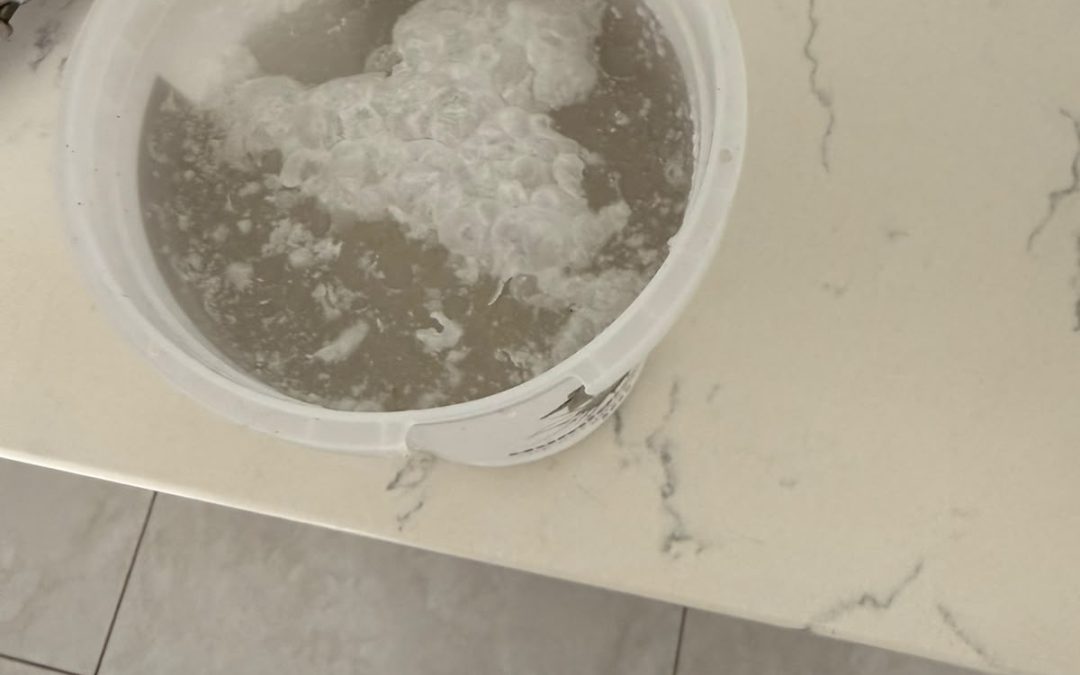
That’s what a moisture absorber does. Crystals pull water out of the air and hold it as liquid — you can see it collecting. It’s passive, there’s no power, and it works in exactly the sort of sealed space where nothing else does.
We make them, so take that as you like — but the principle holds whichever ones you buy. Put one in the cupboard, not the room. A unit in the bedroom does almost nothing for a closed wardrobe. The absorber has to be in the enclosed air you’re trying to dry.

When it isn’t the cupboard
Be honest with yourself about this, because a moisture absorber will not fix a building problem.
Call someone if:
- The wall itself is wet, stained or flaking, not just the contents
- There’s a tide mark rising from the skirting — that’s rising damp
- It’s worse after rain — that’s a leak, a gutter, or failed waterproofing
- It’s one specific spot that keeps coming back no matter what
- You can see black mould spreading across the wall rather than spotting on fabric
Those need a damp specialist. An absorber will take the edge off the smell while the actual cause carries on doing damage.
If damp in your home is affecting anyone’s breathing or allergies, that’s worth raising with a doctor rather than a hardware shop.
How long before it smells better
Air it, wash what’s affected, and put something in to control the humidity, and the smell should be gone inside a week or two. If it isn’t, you’re dealing with the wall, not the cupboard.
Common questions
Will bicarb or charcoal work?
They absorb smell, not water. Useful in a car or a fridge, but in a damp cupboard you’re masking the symptom while the mould carries on.
Does the cupboard need to be closed for an absorber to work?
Yes, and that’s the point. It works on the air it’s sealed in with. An open cupboard is just part of the room.
How many do I need?
One per cupboard as a rule. In a high-humidity or coastal home, one per shelf in the worst ones.
Is it safe around clothes?
Ours are non-toxic and fragrance-free, so nothing transfers to fabric. Check whatever you buy — some contain chemicals you wouldn’t want against linen.
Why is it worse in some rooms?
External walls, north-facing rooms that never get sun, and anywhere next to a bathroom. Those three account for most of it.